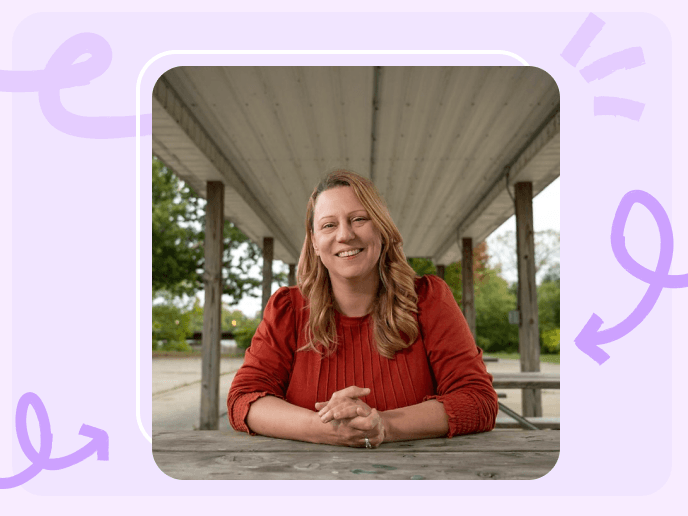
On May 12, 2026, Rachel Wales won a special election to represent Ward 3 on the Champlin, Minnesota City Council. She competed in a four-way race, earned 35.9% of the vote, and unseated the appointed incumbent.
The race became one of the most contentious in the Twin Cities suburbs this year, drawing reports of doxing, harassment, and death threats. In a city still recovering from the shooting of a Democratic elected official in 2025, these threats of violence left the community on edge.
Despite the threats and being outspent roughly seven to one, Wales persevered through the campaign and came out on top. She is now serving Champlin as an independent, anti-corruption city council member.
“I ran on just pure passion and adrenaline, and the desire to protect those folks and to try to make a difference.”
Entering the Race as a Newcomer to Champlin
Wales moved to Champlin from the Chicago area with her husband less than a year before the special election, with no immediate plans to run for office.
"We had rooms that didn't have enough furniture, and we had things we hadn’t yet unpacked,” Wales said. “Most people don't move to a new state, start a new job, purchase a new home, and then think, 'Yeah, that's not stressful enough. I'm going to run for office.'"
Before Champlin, Wales had built a career at the intersection of education, disability rights, and environmental policy. She holds a bachelor's degree in sociology and education from New Mexico State University (2011) and a master's degree in environmental science and public policy from Green Mountain College (2014), along with additional training in nonprofit leadership and management. She has worked as an environmental educator, in special education, and with adults with disabilities.
Wales arrived in Champlin with real political experience. She previously served as a precinct committeewoman and had run for a seat on the Metropolitan Water Reclamation District board, a Chicago-area water utility board.
Before running for city council, she had also spearheaded local civic projects, including a school-zone traffic study, an ADA-compliant community garden, and a grant for clean-air technology at a school in an underserved community.
Soon after moving to Champlin, Ward 3's seat opened up.
"We had some shakeups here where someone from Ward 3 stepped down due to some legal issues, and the individual who was appointed to that position was obviously going to run to stay in it,” Wales said. “I think some of his views on social issues, equality, and equity were just not compatible with me or compatible with a lot of folks in the area."
The appointee, Tim Huttner, was on track to run for the seat unopposed when Wales decided to step up.
“I don't think anybody should run unopposed. It doesn’t matter what race you’re running for or what political party, to be honest with you. I think healthy competition is a good thing, especially in the political world. So I'm like, ‘Okay, this is a little unorthodox, but is it crazy if I ran for office?’”
Wales traces part of her drive to run for office back to her own family of origin.
"I grew up in a diverse, blended family. I have a younger brother who is developmentally disabled. I have two siblings that are adopted, one of whom is in the LGBTQIA community,” Wales said. “I have literally been surrounded by love and surrounded by folks from different marginalized groups, which I think is a good thing. Realizing that they've faced so much scrutiny, bullying, and even abuse legislatively is troubling. That's one of the reasons that I ran and that I’ve run for office before."
Navigating Local Controversy as a City Council Candidate
Months before the special election, the Champlin City Council had voted to continue flying Minnesota's old state flag rather than the newly redesigned one adopted in 2024. The old flag's seal depicts a white settler plowing a field while a Native American man rides off on horseback.
The issue became highly controversial in Champlin. Huttner had voted to keep the flag. Wales, on the other hand, called the council's decision "unnecessarily divisive."
Against that backdrop, Ward 3's race drew an unusual level of vitriol. Wales said she was doxed in an online community group and received death threats.
"This catapulted into the public media space, not because of the race itself and not anything positive,” Wales said. “The fact that I was doxed, that we had death threats for myself and some of the volunteers for my campaign, and all these other negative issues, harassment, nasty posts and comments online and things like that, was disappointing.”
Wales said the hostility only strengthened her resolve.
"I think they were hoping and maybe even assumed that I was going to fold under the pressure, or get scared or intimidated and drop out. I’m like, ‘You don’t know me. That has the opposite effect,’” Wales said. “It made me more emboldened and kind of made me dig my heels in.”
Rather than retreat, Wales focused on reaching voters directly. She joined the Bridge Brigade, a local group that gathers to demonstrate for shared causes. She spent her evenings and weekends out canvassing, talking with Ward 3 residents on their doorsteps.
“I took the time to meet people where they were, speak with people over shared experiences, and just try to be my authentic self.”
"I didn't want to pontificate or anything. I wanted to be more of a sounding board for people, and let them know that if there's anything that bothers them that I can change within my capacity, if I were to be elected to the city council, I would bring that up and fight for them,” Wales said.
What she heard at voters’ doors reinforced why she was running in the first place.
“There’s a lot of folks on both sides of the aisle and different income levels and disparities that just want to be heard. They want to be valued. I think there are folks that are angry because they feel like people just want their vote and then it’s like, ‘Okay, thank you, goodbye.’ They’re not taking their concerns to the city council, to the capital, or to Washington. There’s a lot of people that are obviously disenfranchised, and I think that's problematic.”
While engaging with voters, Wales relied on grassroots tactics to keep her campaign’s costs low.
"I was outspent seven-to–one, and I think most people would be like, ‘Oh, I would have given up,’ or would have felt really disheartened,” Wales said.
When the unofficial results came in on the night of May 12, Wales had won, earning the most votes in the four-candidate field. She had pulled off her victory in the face of local animosity, without a political party or large budget, and only within a year of moving to Champlin.
Governing Through the Same Turbulence
Since taking office, Wales has helped resolve the flag controversy that added so much pressure to her campaign.
"We were able to take down the old Minnesota state flag that is controversial and some folks feel has aspects of racism or colonialism. I consider that a win,” Wales said. “I want to make sure we're not partisan, and I want to make sure that issues aren't politicized. Unfortunately, you see that far too often in politics and problems that affect everyday Americans."
Going forward, Wales said she hopes to make more progress for Champlin, while seeking community input and compromising as needed.
"My door is always open. I'm always willing to be flexible and compromise on things, but I'm obviously not going to compromise on supporting folks who can't fight for themselves. That’s, I think, something that should be valued and should be seen as a good thing. I don't want people to think that that is coming across as political,” Wales said.
For those considering running for office themselves, Wales has poignant advice:
If you have the drive and determination, you honestly can't be stopped. It doesn't matter what your opponent, folks that disagree with you, or trolls online say or post about you, because they don't know you. You shouldn’t let that deter you from trying to make a difference.
Folks who run for office, especially if they’ve never done it before, if they’re trying to do it at the local level, like for school board or city council, that’s where change happens. That’s, I would dare to say, the most important place to start making change and making a difference, because it has a direct and immediate impact on the local community.
From custom campaign plans to voter data, GoodParty.org offers the same tools used by Rachel Wales and thousands of other winning independent candidates.